

Weekly Energy Brief: Oil’s Political fight vs. Too Much Supply
Global Tensions Rise, But Gas Prices Fall


While geopolitical alarms ring in Venezuela, the weight of global inventory keeps the market grounded.
Markets rarely move in straight lines. This week proved it. OPEC+ producers met to hold back a flood of supply. Simultaneously, Washington’s aggressive move on Venezuela disrupted global oil flows. These signals contradicted each other. Traders were left guessing. Meanwhile, U.S. natural gas ignored the noise and simply crashed. Prices shed nearly a dollar as winter warmth forced a brutal reality check.
Market Overview
Crude remains stuck. WTI settled at $59.12/bbl. The market is drowning in barrels. OPEC+ cuts are fighting a losing battle against non-OPEC output.
Natural gas looks worse. Henry Hub futures collapsed to $3.11/MMBtu. Unseasonably warm weather across the Northern Hemisphere drove this decline . Energy stocks ignored the commodity mess. The XLE ETF held at $46.67. Investors clearly prefer steady cash flow over risky commodity bets.
The Week’s Top Stories
Natural Gas: The Weather Wrecking Ball
The EIA reported a 119 Bcf withdrawal. That is stronger than the five-year average. Prices plummeted anyway. Markets trade the forecast. They ignore the past.
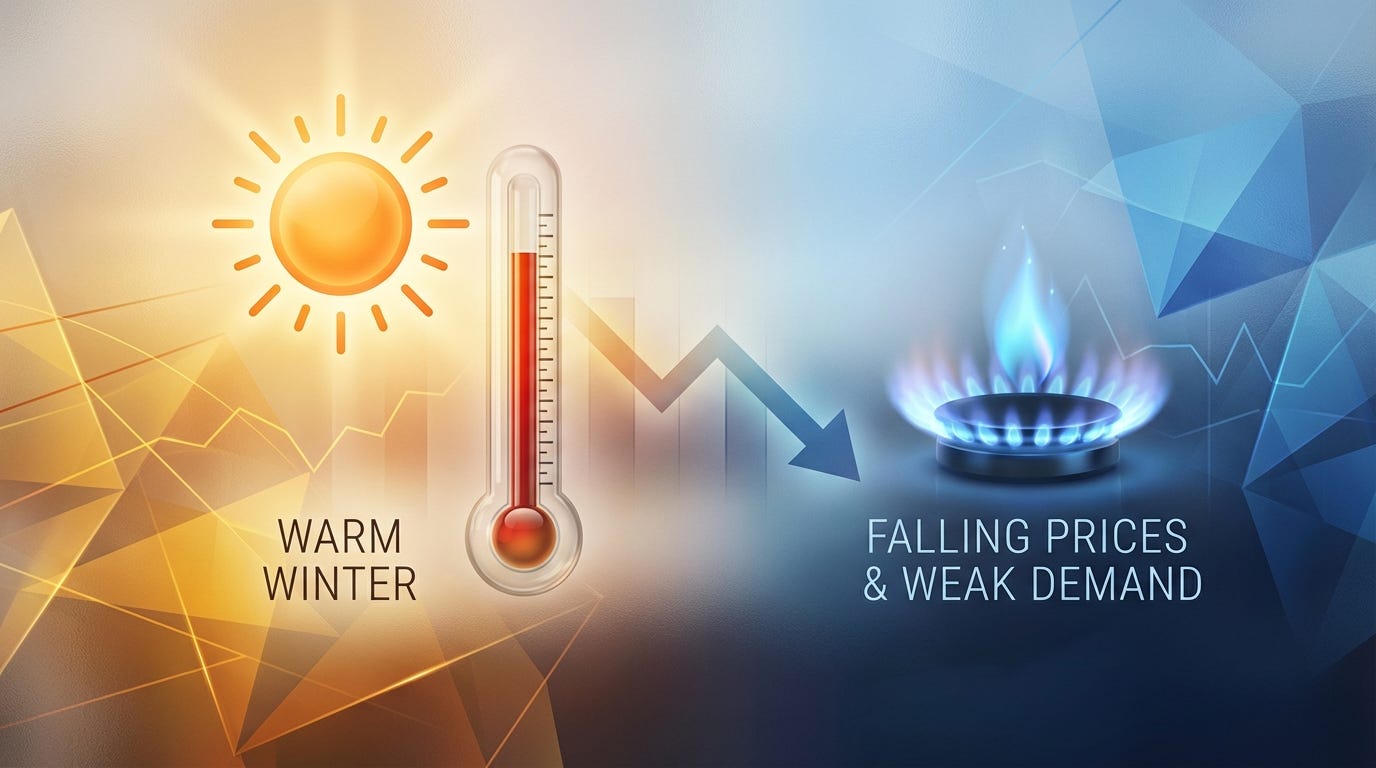
Weather models show mild conditions through late January. This crushed heating demand. The collapse exposes a disconnect. Inventories sit near the five-year average. But without a deep freeze, bulls have no cover .
US LNG Hits “Nano” Heights
Exports offer the only good news. U.S. LNG cleared 100 million metric tons for 2025. America is now the world’s baseload supplier.

This shift matters. Domestic weather sets the daily price. Global demand now sets the floor. New capacity arrives late in 2026. The link between Henry Hub and global indices will tighten.
OPEC+ & Venezuela: The Supply Paradox
OPEC+ froze production increases through Q1 2026. This is not bullish. It is defensive. The group fears a price collapse. Simultaneously, U.S. policy on Venezuela added a risk premium. Actual supply disruptions are theoretical. The policy shift serves as a warning. Sanctions can strand marginal barrels quickly. Even in a flooded market.
The Grid Bottleneck
The IRENA Assembly focused on execution. Capital is abundant. $2.4 trillion flowed into the transition last year. The grid remains the problem.

Investors must adapt. The next growth phase is not about generation capacity. It is about interconnection. Smart grids and infrastructure will determine who delivers the electrons.
Future Impact Analysis
Crude oil will trade on headlines for the next three to six months. Upside is capped at $60–$70 without physical tightening from OPEC+. Venezuela is a wildcard. It could widen spreads. It has not changed the fundamental oversupply.
Natural gas teaches a harsh lesson. Storage strength means nothing without cold weather. Structurally, the record LNG volumes confirm a split market. One price exists for domestic power. Another exists for molecules destined for Europe and Asia.
What to Watch Next Week
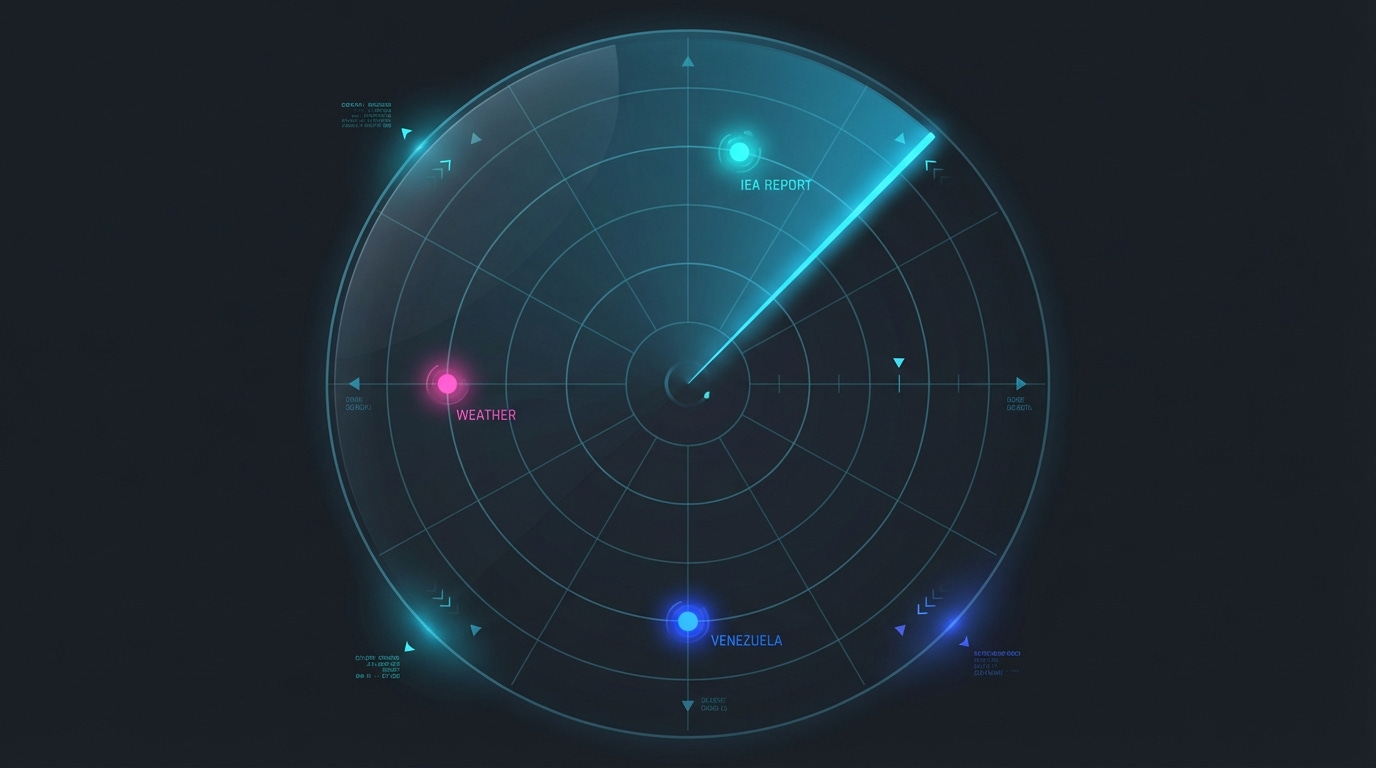
IEA Monthly Oil Market Report (Jan 15): This is the demand check-up. A cut to 2026 growth forecasts will deepen the bearish mood.
EIA Gas Storage (Jan 15): A cold snap must show up in withdrawals. Another weak draw makes $3.00/MMBtu a ceiling .
Venezuela Headlines: Watch for enforcement actions. The market trades rumors. Confirmed disruptions will move prices.
Fluxkinetics Newsletter delivers these insights weekly. Markets do not wait for quarterly reports. Join the professionals who read us first and subscribe Now.
Flux Kinetics - Where energy meets intelligence,
Wassim C.

This content is for educational purposes only and does not constitute financial, legal, or tax advice. All opinions and analyses are my own, and any actions you take are at your own risk after consulting an appropriate professional.
Great breakdown. The disconnect between fundamentals and price action really stands out this exact week.
Thanks Good summary, is it possible to have more details on market technical analysis