

The Time is running.
One Strait. Five Days. Five Percent.

In case you’ve missed my previous article below about US-Japan $500 Billions Deal :

Executive Summary
Oil’s risk premium quietly snapped back on as U.S. Iran timelines tightened, pushing Brent to a six month high and locking in a strong weekly gain that paper markets could not ignore.
U.S. barrels looked tighter on the screen too, with a large crude draw and product draws reinforcing that the physical market is not swimming in surplus right now.
While crude and metals traded the macro crosscurrents, upstream positioning kept moving under the surface, including new exploration acreage momentum in the Eastern Mediterranean.
This Week’s Key Moves
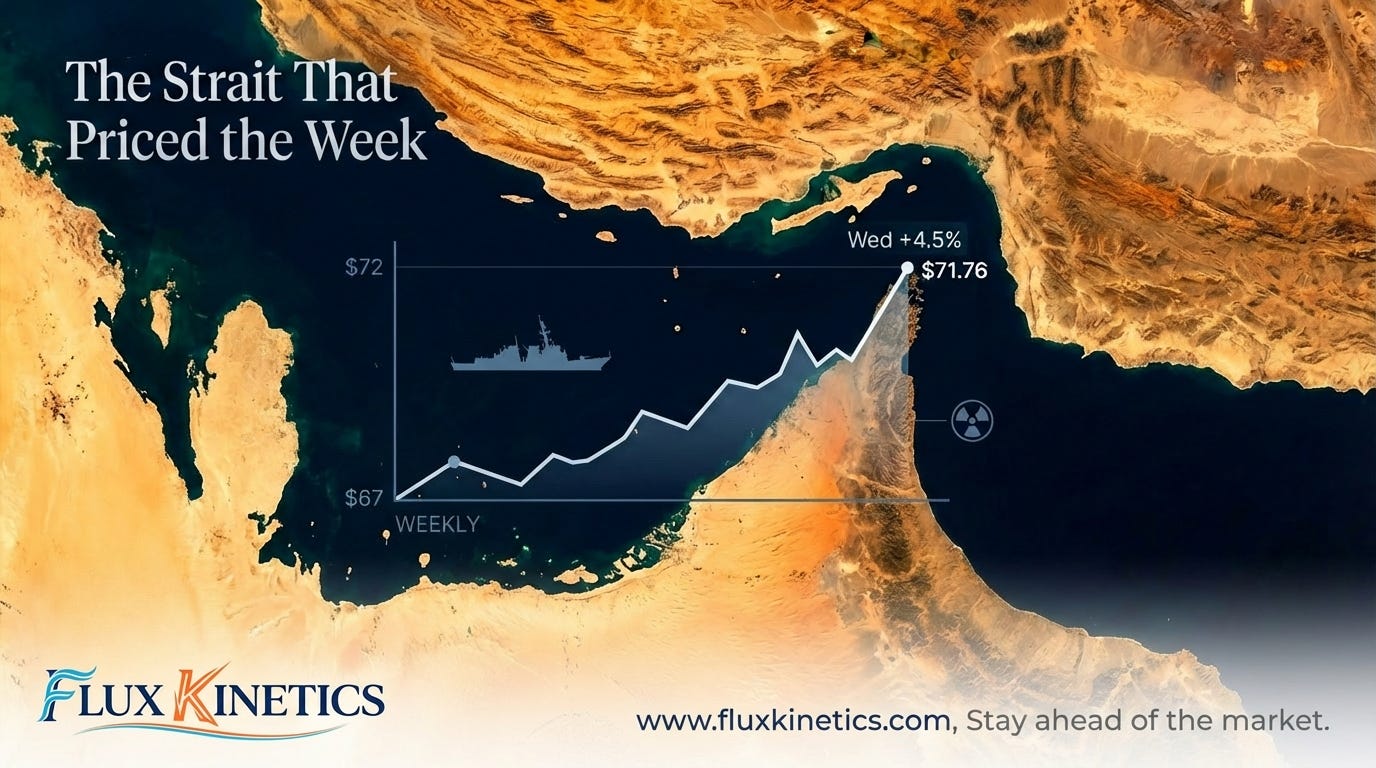
Oil: Brent settled at $71.76 Friday, WTI at $66.39, both up more than 5% on the week and at their highest since July/August 2025. The driver was U.S.-Iran tension and supply risk at the Strait of Hormuz.
Gas: Henry Hub near $3.05/MMBtu. Small weekly gains on cold demand forecasts after weeks of pressure from a mild winter.
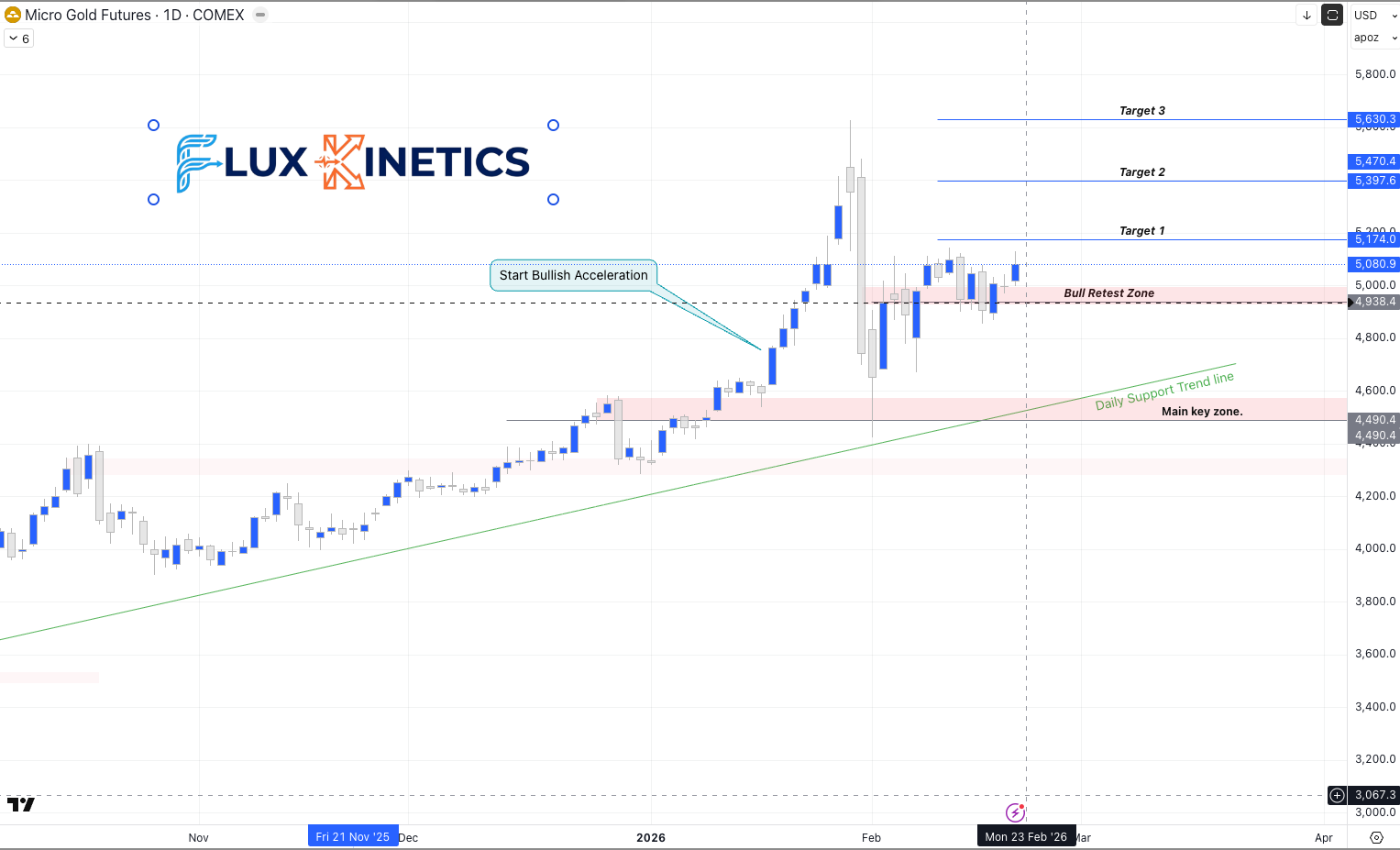
Gold: Gained more than 1% Friday on soft U.S. economic data and fresh tariff concerns, recovering part of a mid-week loss caused by a firmer dollar. Bears tried to push down the “Bull Retest Zone” (Graph below) without success. Target 1 is still valid.
Deep Dive: The Clock Trump Put on the Strait
The most important story this week was not that oil went up.
It was how fast the market relearned an old lesson: when geopolitics puts a timer on supply risk, the curve moves before the headlines feel confirmed.
Monday opened with oil up about 1% as traders leaned into Iran nuclear talk optimism. By Tuesday, the mood flipped. Oil slid 2% to a two-week low on signals of diplomatic progress. A classic “buy the rumor, sell the progress” session that made the week look routine.

Then Wednesday happened.
Brent surged more than 4% in a single session as the full picture came into focus. Iran had briefly closed the Strait of Hormuz for military drills. A joint naval exercise with Russia was announced. Satellite images showed Iran repairing and fortifying military sites. The U.S. was reportedly preparing for potentially weeks-long military operations.
By Thursday, Brent settled at $71.66, its highest close since July 31. Trump warned Iran that “bad things” would happen without a nuclear deal and put a 10-day window on it: “The market will continue to rally in anticipation of something happening.”
Friday was quieter but not calm. Iran’s foreign minister said a draft counterproposal would be ready within days which push the market to wait on a “binary outcome.” Brent edged to $71.76. WTI closed at $66.39. Both locked in a weekly gain of more than 5%.
Now here is the part that matters.
The big-picture data does not support a 5% rally. IEA cut its 2026 demand forecast and projected a sizeable surplus. JP Morgan said OPEC+ would need to cut an extra 2 mbpd to avoid inventory builds through 2027. Saudi Arabia’s crude exports fell to their lowest since September. OPEC+ sources told Reuters the group is likely to restore output increases from April.
That is a bearish setup. And yet the EIA report showed U.S. crude stocks dropped by 9 million barrels against a forecast of a 2.1-million-barrel build. Gasoline and distillates both drew down too. The prior week’s 8.5-million-barrel build was weather distortion. This week confirmed real demand.
What you have is a market caught between a long-run surplus story and a short-term physical tightening, with a geopolitical timer running on the world’s most critical chokepoint. That is why options traders moved first. Call skew widened while spot prices were still finding their footing.
Two stories ran quietly in the background. Russia launched major missile and drone strikes on Ukraine’s energy infrastructure on Saturday Feb 22, after Geneva peace talks ended without a deal. Slovakia threatened to cut electricity to Ukraine unless Kyiv resumed Russian gas transit, a reminder that Europe’s energy map is not as settled as it looked heading into this winter.
On the exploration side, Chevron secured four offshore blocks in Greece this week, adding quietly to its Eastern Mediterranean position. It gets overlooked in a week dominated by Hormuz. But institutional positioning in this basin keeps growing, and it matters most when the Strait is the main story.
Week Ahead: What to Watch

Whether Trump’s Iran deadline produces a deal, an escalation, or deliberate stalling. This sets Brent’s opening direction on Monday.
The next EIA inventory report. After a 9-million-barrel surprise draw, the Feb 20 week print either confirms a tightening trend or reverses it.
Any formal OPEC+ signal on the April output restoration. Timing of any announcement moves the forward curve right away.
European gas and power markets Monday morning, after Russia’s Saturday infrastructure strikes and Slovakia’s electricity threat.
Trump’s announced energy meeting in Tokyo for March, which could shift LNG and critical minerals talks across Asia-Pacific.
Action Items
For traders: Call options on Brent surged as institutional money chased upside protection into the weekend close. If the Iran standoff escalates before it resolves, the $75 to $77 range carries low technical resistance. Size for the binary outcome and protect the downside if Tehran moves toward a signed counterproposal. Gold expected to reach our Target 1 (5,170$) level this week, “Bull Retest Zone” is a buying opportunity in above Gold trading graph.
For operators: The back-to-back EIA swings, an 8.5-million-barrel build one week and a 9-million-barrel draw the next, mean U.S. supply signals are noisy right now. Do not anchor March procurement decisions to either week alone. Wait for next week’s print before locking term pricing.
For investors: The gap between the IEA demand cut, JP Morgan’s surplus view, and a 5% weekly price move is where the opportunity sits. Companies with Hormuz-exposed production, supply chain exposure to the Strait, or long-dated Eastern Med exploration positions carry extra upside for as long as this standoff holds.
If this briefing helped you think more clearly about the week ahead, send it to the one person on your team who always asks what actually moved this week and why.
That is who Flux Kinetics is written for.
Share this post and bring them into the conversation.
Subscribe to Flux Kinetics and get this briefing every Sunday before the market opens. No noise, no filler, just the signal that energy professionals actually use.
Flux Kinetics - Where energy meets intelligence,
Wassim C.

This content is for educational purposes only and does not constitute financial, legal, or tax advice. All opinions and analyses are my own, and any actions you take are at your own risk after consulting an appropriate professional.
The options skew widening before spot moved is such a telling detail. Always interesting to see where the smart money hedges first.