

9 Rules That Saved 1000+ Lives. Use Them at Home
Oil field safety, translated for your family


Here’s something that keeps me up at night: Between 2008 and 2017, 376 workers in the oil and gas industry died in incidents that could have been prevented. That number haunts me, especially knowing each one followed a pattern we’d seen before.
The industry responded by creating nine brutally simple Life-Saving Rules, developed by the International Association of Oil & Gas Producers (IOGP). These aren’t bureaucratic guidelines written by lawyers. They’re battle-tested protocols born from tragedy and refined across billions of work hours on offshore platforms, refineries, and pipeline projects worldwide.
But here’s what shocked me when I studied these rules closely: they’re not just for hard hats and steel-toed boots. Strip away the industry jargon, and you’re left with a framework that protects what matters most, anywhere, anytime.
The $10 Billion Question Nobody’s Asking
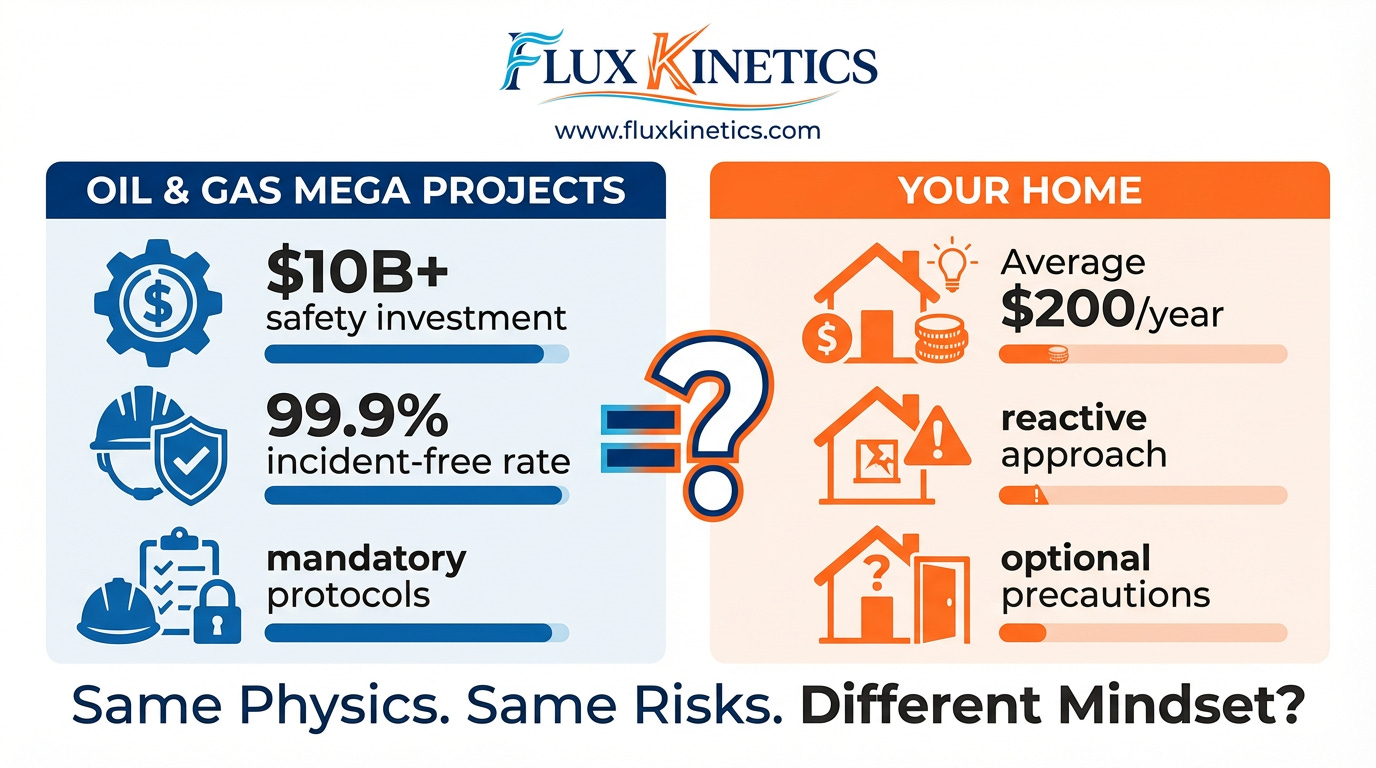
Energy companies spend astronomical sums on safety. A single offshore platform invests more in protective systems than most small towns spend on infrastructure. Not because executives are particularly noble, but because one major incident can bankrupt a company overnight.
The math is simple: prevention costs thousands, failures cost billions.
Your home operates on the opposite logic. We insure against catastrophe but rarely engineer to prevent it. We react to close calls instead of eliminating them systematically. We treat safety as common sense rather than a discipline requiring specific protocols.
Yet the physics doesn’t care about your budget. Gravity kills at the same rate whether you fall from a drilling derrick or a ladder in your garage. Electrical current doesn’t distinguish between a substation technician and a homeowner changing a light fixture. Vehicle crashes crush families just as efficiently as they do fleet drivers.
Why Industrial Safety Rules Work at Home
Major energy projects operate on a simple truth: one mistake can cascade into catastrophe. A bypassed safety control on a gas compressor doesn’t just risk one life, it threatens the entire facility and potentially the surrounding community.
Your home operates on the same physics, just with lower visibility. A frayed electrical cord near water. A ladder placed on uneven ground while you’re alone. A teenager texting while driving your car to the store. The stakes feel different until they’re not.
The nine rules work because they focus on high-consequence activities, the moments where things go irreversibly wrong. In refinery language, they call these “fatal risk exposures.” In your life, they’re the split-second decisions that separate close calls from 911 calls.
Research shows that 80% of serious injuries in both industrial and residential settings stem from just nine activity types. The IOGP identified them. You live them daily without the protective infrastructure.
The Nine Rules, Translated for Real Life
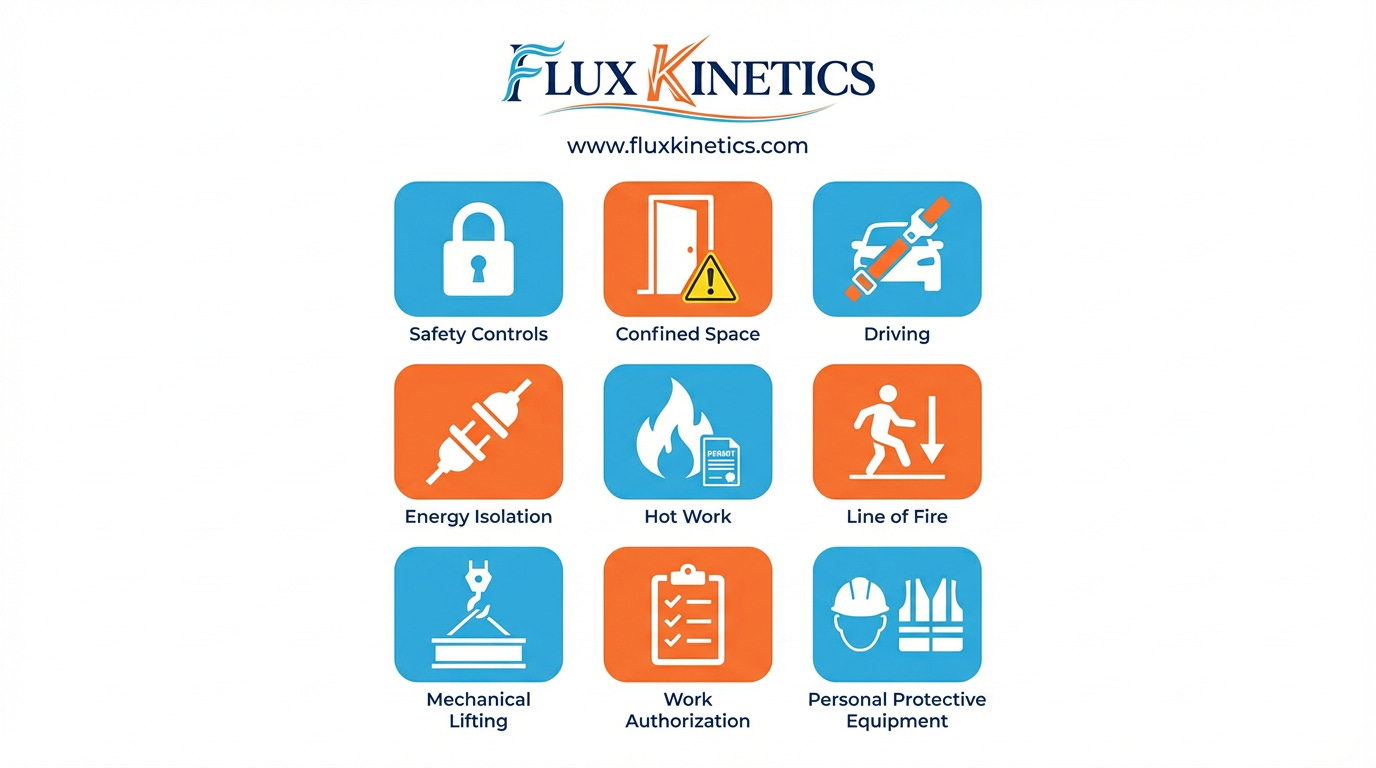
1. Bypassing Safety Controls
Industry version: Never disable gas detectors or override emergency shutdowns without authorization.
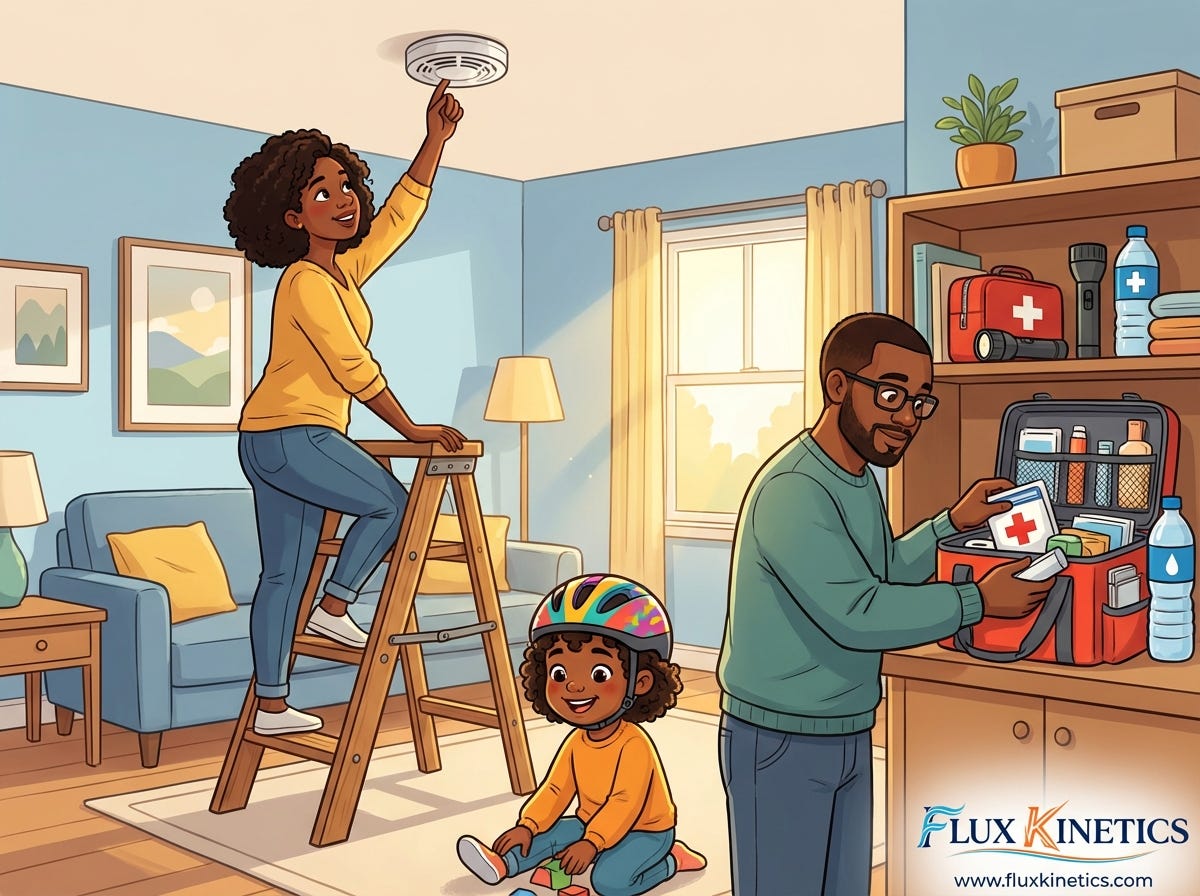
Your version: Don’t remove the battery from the smoke detector because it’s “too sensitive.” Don’t prop open the fire door for convenience. Don’t disable the auto-shutoff on your space heater. Those annoying beeps and automatic stops exist for your worst day, not your average one. The National Fire Protection Association reports that three out of five home fire deaths occur in properties without working smoke alarms. That’s not random, it’s predictable.
2. Confined Spaces
Industry version: Get a permit and air monitoring before entering tanks or vessels.
Your version: Never let anyone work alone in an attic, crawl space, or any area with one exit. Poor ventilation turns basements into hazard zones faster than you think. Carbon monoxide, natural gas leaks, oxygen-depleted spaces, these don’t announce themselves. Always have a buddy system and a charged phone within reach. If someone needs help in a confined space, don’t rush in. That’s how single fatalities become double fatalities.
3. Driving
Industry version: Seatbelts mandatory, speed limits sacred, no phone use, pre-trip vehicle inspections required.
Your version: This one translates directly with zero modification needed. The leading cause of workplace fatalities in oil and gas? Vehicle incidents. Same as everywhere else. According to the National Safety Council, motor vehicle deaths reached 46,000+ in recent years. Texts can wait. Every single time. No exceptions, no “just this once,” no “I’m good at multitasking.” The vehicle doesn’t care about your confidence.
4. Energy Isolation
Industry version: Lock out electrical and mechanical energy before maintenance. Verify zero energy state.
Your version: Flip the breaker before changing light fixtures, not just the switch. Unplug the lawn mower before clearing the blade. Wait for the appliance to cool down completely. Stored energy (springs, capacitors, hot surfaces, pressurized lines) doesn’t care about your timeline. It doesn’t get impatient. It just releases when disturbed. Industrial workers use lockout/tagout procedures because assumption kills.
5. Hot Work
Industry version: Permits required for welding, cutting, or any spark-generating activity near flammables.
Your version: Never use a grill indoors or in the garage, even “just for a minute.” Keep space heaters three feet from anything flammable, including that pile of laundry you meant to fold. When deep-frying turkey (yes, people still do this), read the entire manual first and keep a fire extinguisher within arm’s reach, not in the garage. Check your fire extinguisher’s pressure gauge right now. When’s the last time you looked at it?
6. Line of Fire
Industry version: Never position yourself where moving equipment, falling objects, or pressurized systems can strike you.
Your version: Don’t stand on the downhill side when your teenager practices parking. Position yourself beside, not in front of, the garage door as it opens (spring failures happen without warning). When uncapping anything under pressure (radiators, spray cans, compressed air fittings), point it away from your face and body. Stand clear of any load being lifted or lowered. Physics doesn’t negotiate, compromise, or give warnings.
7. Mechanical Lifting
Industry version: Inspect rigging, respect load limits, maintain exclusion zones, never walk under suspended loads.
Your version: Never walk under a raised car hood without a secure prop rod. Check the weight rating on that attic ladder before hauling storage boxes (most are rated for 250 lbs, including your body weight). When helping friends move, the couch doesn’t care about your pride. Use proper technique, use enough people, or hire professionals. Back injuries are cumulative. Today’s “I’ve got this” becomes next year’s chronic pain.
8. Work Authorization
Industry version: High-risk activities require permits, competency verification, and safety reviews before starting.
Your version: Before anyone tackles electrical work, roof repairs, or tree removal, ask three questions: “Do we have the right skills for this? Do we have the right tools? Are the conditions safe?” If any answer is “sort of” or “probably,” stop. Call someone qualified. Pride costs less than medical bills, and significantly less than funerals. This isn’t about masculinity or self-sufficiency. It’s about honest assessment of capability versus risk.
9. Personal Protective Equipment
Industry version: Hard hats in construction zones, safety glasses in refineries, hearing protection near compressors, proper respirators for fumes.
Your version: Bike helmets aren’t suggestions, they’re physics insurance. Safety glasses when using power tools, lawn equipment, or anything that spins fast. Gloves when handling chemicals, including common cleaners (mix the wrong ones and you’ve created a weapon). Hearing protection when operating loud equipment. The gear only works when worn, not when hanging in the garage “because it’s uncomfortable.”
The Five-Minute Ritual That Changes Everything
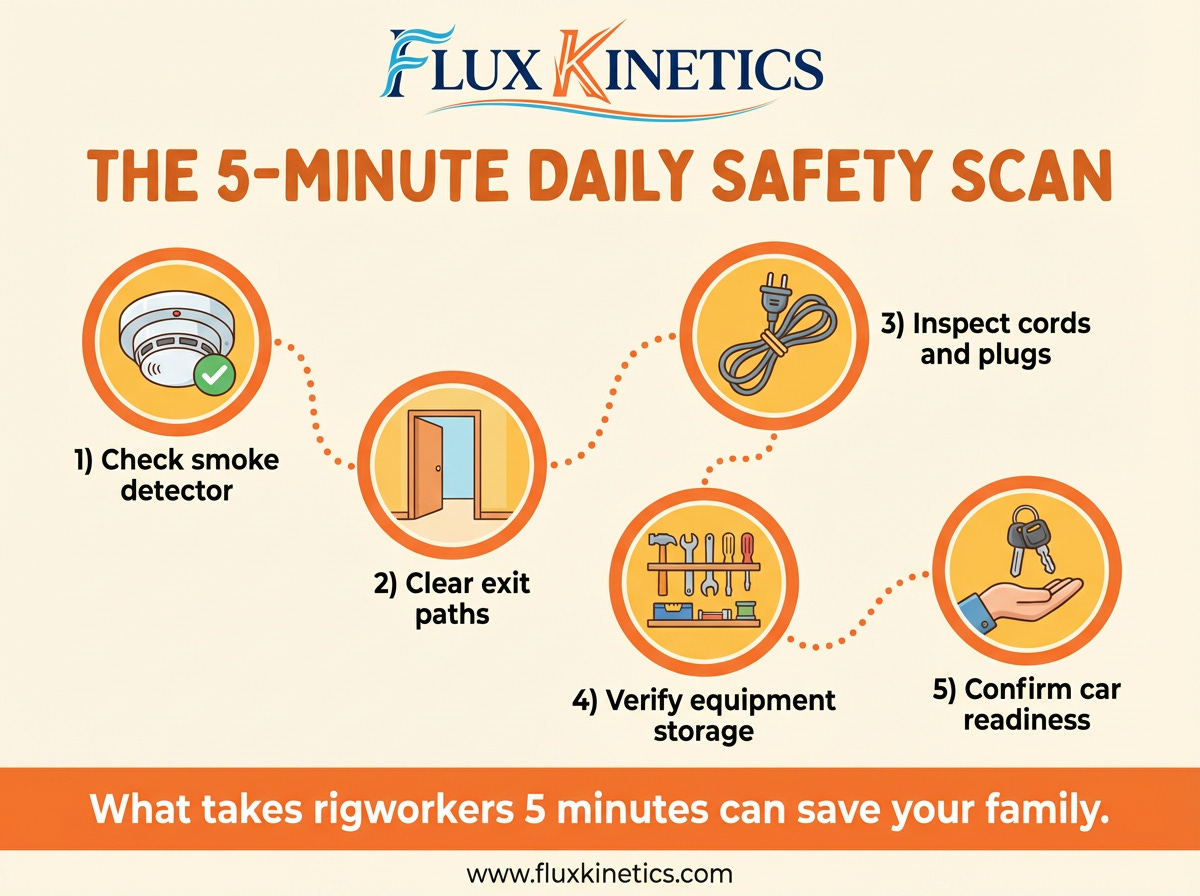
On every offshore platform I’ve consulted for, workers perform a “pre-tour safety check” before their shift. Takes five minutes. Prevents disasters. Here’s your home version:
Morning scan (2 minutes):
Glance at smoke detector lights (green means working)
Check that exit paths are clear (no shoes by the door creating trip hazards)
Verify car keys are in their designated spot (prevents rushed, distracted departure)
Evening scan (3 minutes):
Walk the house checking for cords, especially near water
Confirm stove is off and space heaters are three feet from walls
Lock up tools and chemicals if you have kids or pets
That’s it. Seven checks, five minutes, massive risk reduction. Industrial safety isn’t complicated. It’s consistent.
Why This Matters Right Now
The oil and gas industry learned these lessons through data, specifically which activities generated the most fatalities and serious injuries. Your family won’t generate that data, but you live in the same physical world governed by the same unforgiving rules.
Energy never disappears, it just changes form. Height plus gravity equals consequences every time. Momentum doesn’t care about your intentions. These aren’t philosophical observations, they’re engineering realities that industrial safety transformed into simple, repeatable actions.
The industry proved something critical: you can’t eliminate risk, but you can systematically reduce exposure to fatal-risk activities through clear rules and consistent execution.
After implementing these nine rules across thousands of facilities globally, the industry saw measurable changes. Sites that rigorously enforced the protocols reduced serious incidents by 60-80% within two years. Not by working slower or hiring more people. By refusing to bypass the rules, ever, for any reason.
Your 30-Day Safety Transformation (The Done-For-You Plan)
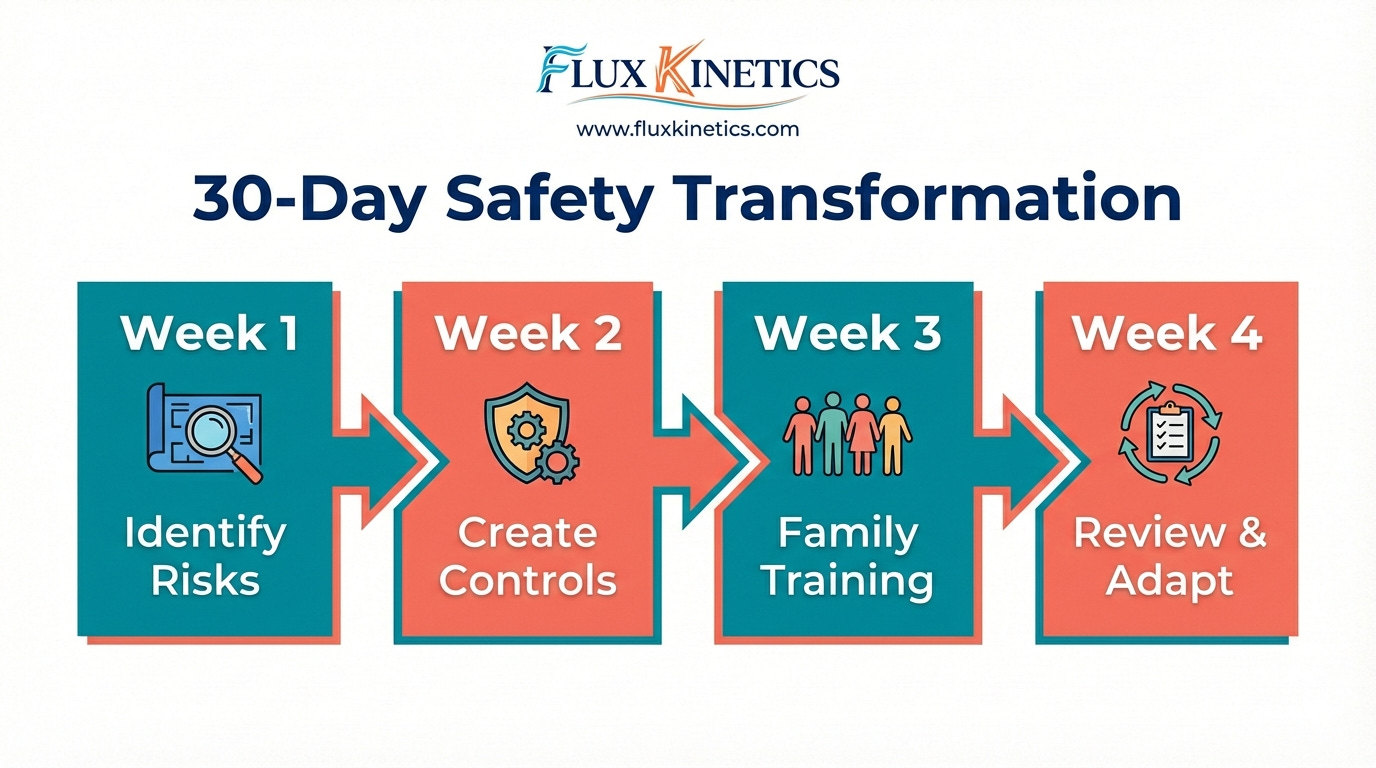
Week 1: Risk Identification Walk (Investment: 30 minutes)
Walk through your home with this checklist. Where do the nine rules apply? Write it down physically with pen and paper. Garage workshop? That’s rules 4, 5, 7, and 9. Kitchen? Rules 1, 4, and 5. Cars? Rule 3, non-negotiable. Don’t judge, just document. You’re doing a safety audit, not confessing sins.
Week 2: Control Implementation (Investment: $50-150, 2 hours)
Pick the three highest risks you identified. Install what’s needed: cabinet locks for chemicals under the sink, non-slip mats for the bathroom and shower, a dedicated key hook by the door, a proper step stool that lives where you actually need it. This isn’t about buying your way to safety. It’s about removing friction from doing the safe thing.
Week 3: Family Training (Investment: 15 minutes)
Hold a household meeting. Don’t lecture, demonstrate. Show kids how to check smoke detectors (press the button, listen for beep). Walk through the emergency exit plan while actually walking the route. Explain why the circuit breaker box matters and where it is. Make someone other than you locate the fire extinguisher and read its instructions aloud. Make it concrete, not abstract.
Week 4: Review and Adjust (Investment: 20 minutes)
What worked? What didn’t? Where are people cutting corners? This is the critical week most people skip. Adjust rules to fit reality without compromising safety. If nobody uses the step stool because it’s in the wrong closet, move the step stool. If kids leave bikes in the driveway because there’s no clear storage spot, create one. The environment shapes behavior more than willpower does.
The Real Stakes
Here’s what I didn’t tell you at the beginning: I spent more than a decade in energy project safety, a friend who was also a collègue didn’t come home from a job site. Preventable incident. Bypassed a safety control to save 10 minutes. Left behind a wife and two kids who now have to navigate life without him over 10 minutes.
Safety culture in industrial settings isn’t about eliminating risk, it’s about making high-consequence activities survivable through consistent, simple protocols. Your life deserves the same engineering rigor that protects a $5 billion LNG facility.
These nine rules prevented thousands of tragedies across drilling rigs, refineries, and processing plants worldwide. The protocols work. The question isn’t whether they’re effective. The question is whether you’ll apply the same logic that protects trained professionals to the people you’d take a bullet for.
Start with one rule this week. Just one. Pick the rule that scared you most when you read it because you recognized yourself in the “your version” description.
Next month, you won’t remember which rule you started with because they’ll all feel obvious. That’s when you’ll know it’s working. That’s when your home starts operating with the same safety mindset that sends thousands of workers home to their families every single day in the world’s most dangerous industry.
The rules work. They’ve been proven across continents, cultures, and decades. The only variable is you.
Conclusion: Safety Isn’t Luck, It’s Architecture
Every time a crew completes a shift on an offshore platform without incident, it’s not chance. It’s the result of deliberate design, consistent protocol, and the collective agreement that no deadline, no shortcut, no convenience is worth a life.
Your home deserves that same architecture. Not because your daily routine is as dangerous as a refinery turnaround, but because the consequences of failure are just as permanent. Industrial safety culture proved that humans are terrible at gambling with physics, but excellent at following clear rules that remove the gamble entirely.
The difference between families that experience tragedy and those that don’t often comes down to small decisions repeated consistently. The choice to check the smoke detector monthly. The refusal to text while driving, ever. The discipline to flip the breaker before touching electrical work. These aren’t heroic acts. They’re engineering thinking applied to the people and places you can’t afford to lose.
You now have what took the energy industry decades and billions to develop. The question is simple: will you use it?
What’s one rule you’re implementing this week? Drop it in the comments.
Want the deep dive? Join energy professionals and safety-conscious leaders at Flux Kinetics, where we translate industrial intelligence into practical wisdom. Subscribe here and become part of a community that takes safety as seriously as the people who work in the most unforgiving environments on Earth.
Share this with someone who needs to hear it. Tag them. Send them the link. Better yet, walk through your home this weekend together. Two sets of eyes catch what one misses.
Fluxkinetics Newsletter delivers these insights weekly. Markets do not wait for quarterly reports. Join the professionals who read us first and subscribe Now.
Flux Kinetics - Where energy meets intelligence,
Wassim C.

This content is for educational purposes only and does not constitute financial, legal, or tax advice. All opinions and analyses are my own, and any actions you take are at your own risk after consulting an appropriate professional.
Amazing article ! Rare to see the safety part applicable to everyday life
Rule #3 will also keep you out of the hospital!